
Thick Plate Forming and Structural Integrity
Posted on: February 25, 2026
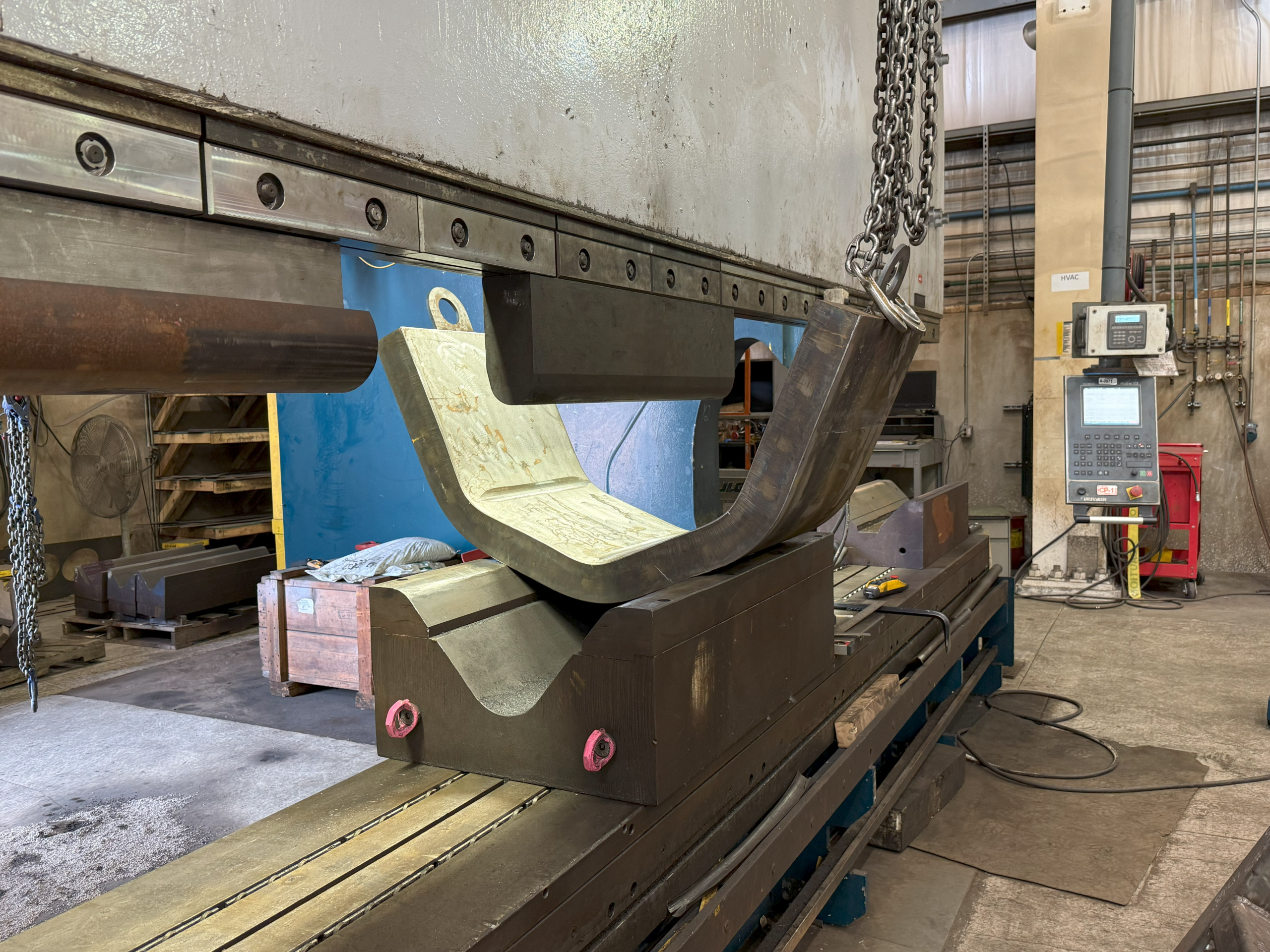
Expanding Design Possibilities Through Forming Capacity
Thick plate forming is one of the clearest differentiators in heavy fabrication.
A press brake capable of bending steel up to four inches thick fundamentally changes how structures can be engineered. Instead of building assemblies from multiple welded plates, large sections can be formed from single pieces of material.
At Weldall, thick plate forming capacity supports structural efficiency at scale.
Reducing Weld Seams, Increasing Strength
Every weld seam introduces potential variables: heat input, distortion, inspection requirements, and long-term fatigue considerations. By bending thick plate instead of assembling smaller sections, engineers can reduce seam count and simplify structural load paths.
Fewer seams often mean:
-
Improved structural continuity
-
Reduced distortion during fabrication
-
Lower inspection complexity
-
Improved fatigue performance in dynamic environments
For industries such as mining and heavy equipment manufacturing, these advantages directly impact lifecycle durability.
Precision at Industrial Scale
Forming thick plate is not simply about force. It requires controlled tooling, experienced operators, and predictable material behavior. Improper forming introduces stress concentrations that can affect downstream welding and machining.
When thick plate bending is executed correctly, it simplifies fabrication while strengthening the final structure. It allows design engineers to think in larger, cleaner geometries.
In heavy fabrication, forming capacity is not just a machine specification. It is a structural advantage.