
What Heavy Fabrication Looks Like at Scale: Inside Weldall’s Facility
Posted on: February 25, 2026
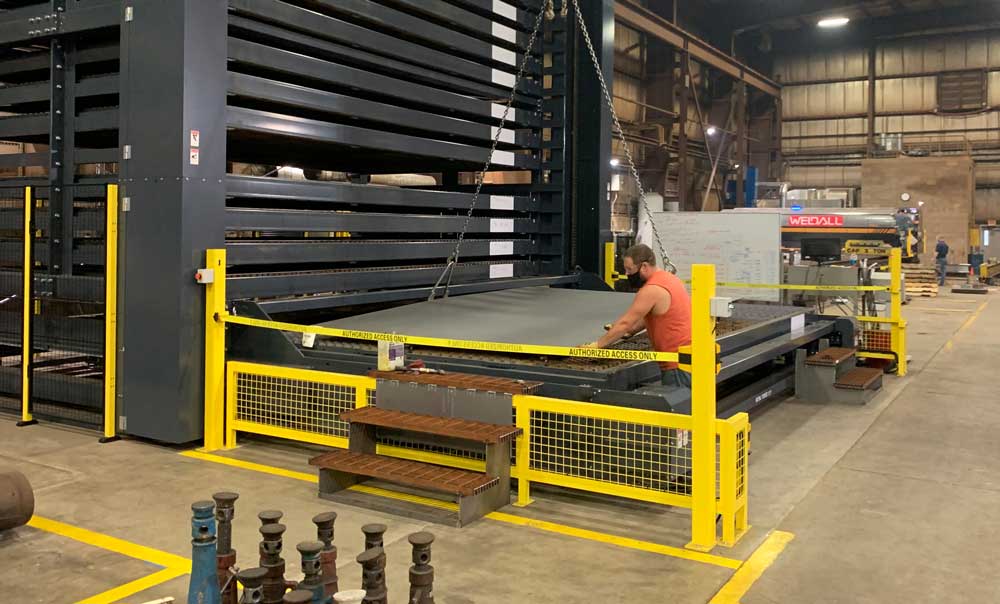
Scale Changes Everything
Heavy fabrication is often reduced to the phrase “large weldments.” In reality, scale transforms every aspect of production. Material handling becomes engineering. Workflow becomes structural planning. Equipment capacity becomes a competitive advantage.
A walk through Weldall’s facility makes that clear immediately. The first impression is not simply the size of the building, but the infrastructure required to operate at this level. Heavy fabrication is not just about building large components. It is about building a facility capable of supporting them.
Engineered Material Handling
Each fabrication bay is equipped with massive overhead cranes designed to lift, position, and transport components that weigh tens of thousands of pounds. In many fabrication environments, cranes are occasional support tools. In a heavy fabrication facility, they are foundational systems.
Material handling is not secondary. It is built into the production strategy. When weldments grow in size and complexity, the ability to safely rotate, reposition, and move them between welding, machining, and finishing stages directly impacts throughput and quality. The layout of Weldall’s bays reflects that understanding. The cranes are not add-ons. They are structural components of the workflow itself.
Thick Plate Forming Capability
Equipment capacity reinforces that scale. One of the most notable machines on the floor is a press brake capable of bending steel up to six inches thick. That level of forming capacity is uncommon and significantly expands design flexibility.
Bending thick plate reduces the need for multiple welded sections. Fewer weld seams can improve structural integrity, reduce distortion, and streamline inspection requirements. It also shortens fabrication timelines by minimizing secondary processes. For engineers, this changes design constraints. A fabrication partner with this level of forming capability allows for simpler, stronger structural solutions.
In industries such as mining, infrastructure, and heavy equipment manufacturing, these efficiencies translate directly into durability and lifecycle performance.
Real-World Projects at Industrial Scale
The scale of work in production reinforces the facility’s capabilities. During the plant tour, several projects stood out.
Large aluminum aerial assemblies designed for fire trucks were in fabrication. These are engineered structures that must balance strength and weight while maintaining reliability in emergency response conditions. Aluminum fabrication at this size requires a different set of welding procedures and distortion controls than heavy carbon steel, yet it operates within the same facility.
Gigantic crane masts were also in production. These vertical structural assemblies must withstand dynamic loads and demanding environmental conditions. Building components of this size requires precise alignment, controlled weld sequencing, and experienced operators who understand stress management in thick materials.
Perhaps the most visually striking project was a massive excavator bucket destined for the mining industry. Mining attachments operate in abrasive, high-impact environments. Material selection, reinforcement strategies, and weld integrity are critical. When a bucket of that scale occupies a fabrication bay, it demonstrates capability in producing mission-critical components for harsh conditions where failure translates directly into operational downtime.
Building Their Own Expansion
Weldall is currently expanding its facility, and the structural steel girders and beams for that expansion were fabricated in-house. This decision reflects more than convenience. It demonstrates confidence in internal process control and structural expertise.
Fabricating one’s own expansion steel is a practical expression of capability. It signals that the organization trusts its systems, equipment, and workforce at the same scale required by its customers.
Heavy Fabrication as Infrastructure
At this level, heavy fabrication is not simply about welding large parts. It is about managing structural complexity across every stage of production. Engineering must account for load paths, distortion, and material behavior. Material handling systems must support safe and efficient movement. Equipment must be sized for upper-limit requirements, not average jobs. Workforce training must match that complexity.
For companies operating in mining, heavy equipment, infrastructure, and industrial OEM markets, selecting a fabrication partner is less about who can weld and more about who can manage scale.
You can describe heavy fabrication in specifications and equipment lists. But walking through a facility where structural components tower overhead and cranes move multi-ton assemblies across bays offers a clearer understanding.
At scale, fabrication is infrastructure.
And infrastructure requires a facility built to support it.