
When Failure Isn’t an Option: The NASA Test Structure Weldall Fabricated for Artemis II
Posted on: March 31, 2026
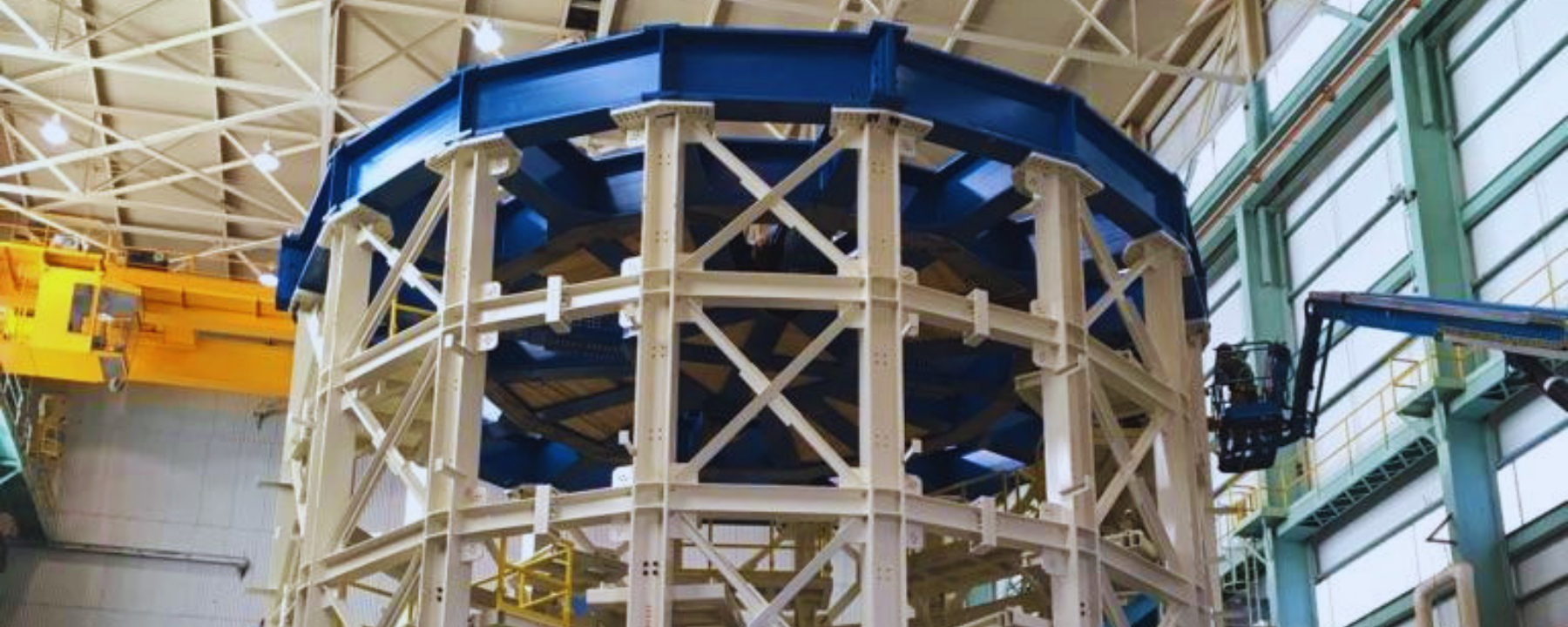
As NASA prepares for the Artemis II mission, the first crewed flight of the Space Launch System carrying astronauts beyond Earth orbit in over 50 years, most people will focus on the launch.
The rocket. The crew. The return to deep space.
But the real story started years earlier.
It started in test environments where structures were pushed beyond their limits until engineers fully understood how they would behave under pressure. Because in a mission like this, “it works” is not enough. It has to hold under conditions no one hopes to ever see.
Part of that testing relied on a structure fabricated by Weldall.
 The Structure Behind the Testing
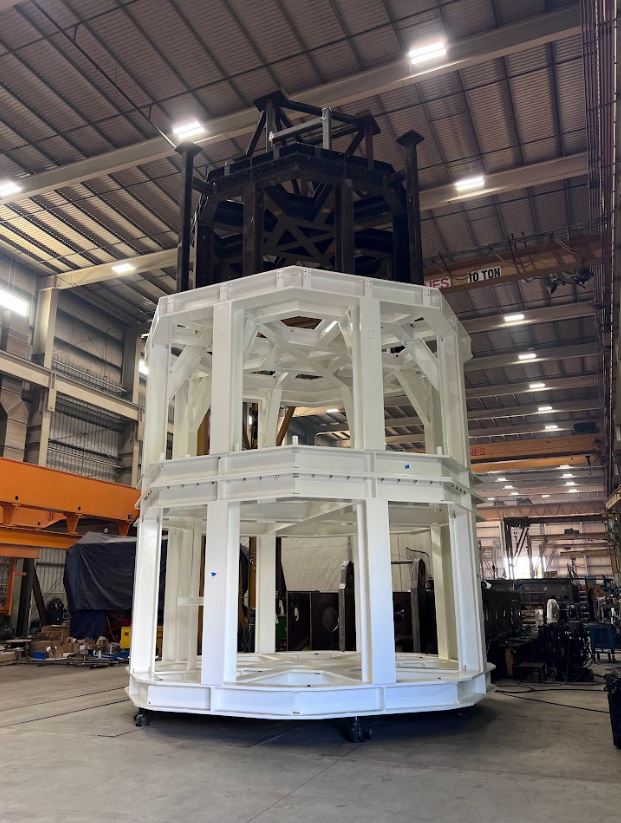
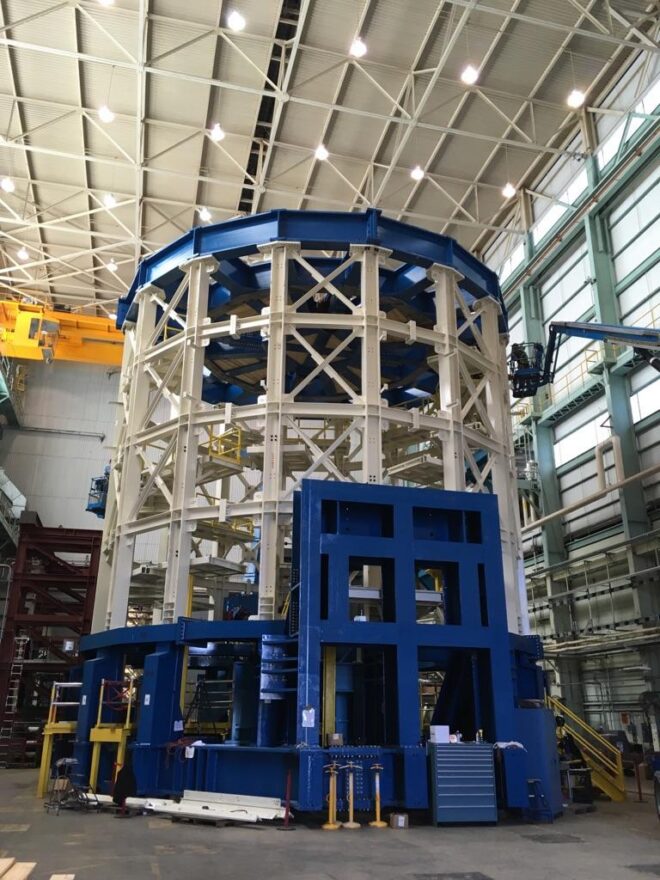
Weldall built the internal pedestal core structure used to support critical test hardware for NASA’s Space Launch System. This was not a secondary component or simple fixture. It was a massive, load-bearing structure designed to operate inside one of the most demanding testing environments in the world.
The structure stood nearly 35 feet tall, formed in a 19-foot hexagonal footprint, and weighed over 124,000 pounds. It was fabricated from four combined weldments using primarily wide flange beams. At this scale, fabrication is not just about putting steel together. Every joint becomes a structural decision, and every decision carries through to performance under load.
Each critical connection required complete joint penetration welds, followed by ultrasonic testing to verify integrity across the structure. Nothing was assumed. Every weld was confirmed.
Precision at 35 Feet Isn’t a Detail
One of the most demanding aspects of the project was maintaining alignment across the full height of the structure. Hole locations at the uppermost section had to fall within thousands of an inch tolerance relative to the base. Over nearly 35 feet, even small amounts of distortion can compound into major misalignment.
Meeting that requirement required more than careful welding. It required control over heat, sequencing, and material behavior throughout the entire process.
To achieve that, Weldall implemented on-site stress relieving using custom-built ovens developed specifically for this project. This marked the first time this capability was deployed at their facility. By stress relieving each unit before final integration, distortion was minimized and alignment was preserved.
This wasn’t an added capability.
It was what the project demanded.
Testing Doesn’t Stop When It Works
Once integrated into NASA’s testing environment, the conditions escalated quickly. Engineers used hydraulic systems to apply forces that replicate the extreme loads seen during launch and ascent. In some cases, more than three million pounds of force were applied while thousands of data channels recorded how structures responded in real time.
What separates this level of testing from standard validation is what happens next.
They don’t stop when everything performs as expected.
They keep going.
 Designed to Understand Failure
In one of the most telling examples, a hydrogen tank passed all simulated flight conditions without deformation. That alone would validate most designs. Instead, engineers continued increasing the load until the structure failed.
The tank ultimately withstood more than 260 percent of expected flight loads before buckling.
That decision changes the outcome. Because once failure is understood, design becomes predictable. Safety margins become real. Risk becomes measurable.
When Prediction Matches Reality
A similar approach was taken with the liquid oxygen tank. When it failed, it did so within two percent of the predicted load and in the exact location engineers expected.
That level of precision is not about building something stronger.
It’s about building something understood.
When engineers can accurately predict how a structure will behave under stress, they can design with confidence instead of assumption.
What This Means for Your Project
Most companies will never build for NASA.
But many face the same type of challenges. Large structural weldments. Tight tolerances across long spans. Load-bearing components where failure is not an option.
In those situations, the real question is not whether something can be built.
It’s whether it will perform.
Real-world conditions introduce variables that don’t show up in drawings. Loads shift. Materials move. Small inconsistencies grow under stress. Most failures don’t come from obvious weaknesses. They come from what wasn’t fully understood ahead of time.
The Standard Weldall Builds To
Weldall’s role in the Artemis program reflects more than capability. It reflects a standard.
The same approach used to support NASA-level testing applies directly to complex industrial fabrication. Large-scale weldments, complete joint penetration welding, ultrasonic verification, controlled stress relieving, and precision across long spans are not separate services. They are part of a system designed to deliver confidence in the final structure.
Because at this level, fabrication is not just about meeting a print.
It’s about knowing how that structure will perform when it matters most.
Let’s Talk About Your Most Complex Weldment
If you’re working on a structure where failure isn’t an option, the fabrication partner matters more than the design.
Weldall specializes in large, complex weldments that require tight tolerances, verified weld integrity, and performance under real-world load.
Start the conversation early.
Because the more complex the project, the more critical the decisions are upfront.
Contact Weldall to discuss your most complex weldment.