
From NASA Test Structures to Fusion Energy Components: The Fabrication Work Behind Projects Where Failure Isn’t an Option
Posted on: June 25, 2026
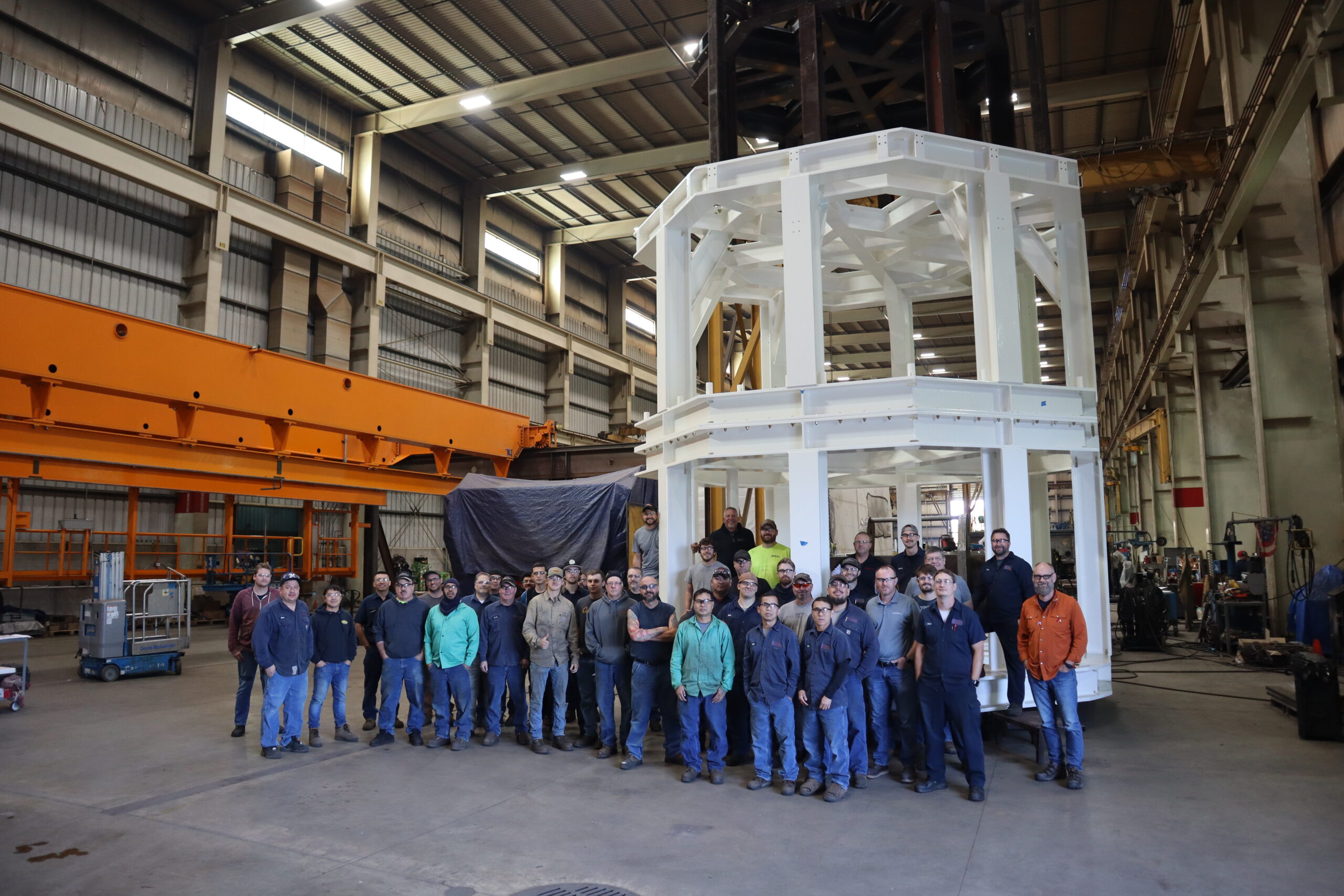
Some fabrication projects leave very little room for interpretation. A spacecraft test structure has to produce reliable data before flight hardware ever leaves the ground. A fusion reactor component has to hold alignment under forces most shops will never encounter. A critical structural weldment has to meet the drawing, pass inspection, and perform exactly as intended once it becomes part of a much larger system.
That is the kind of work Weldall Manufacturing is built to support.
Weldall has experience fabricating components and structures for demanding aerospace, advanced energy, power generation, defense, and heavy industrial applications. These are not ordinary fabrication environments. They are projects where material behavior, weld quality, dimensional control, inspection, documentation, and schedule discipline all have to work together.
That is the real proof point. Not who says they trust you. What the work requires.
Ready to Talk About Your Project?
Have a complex weldment challenge? Don’t wait! Shops capable of this work have limited capacity.
The Machine That Could Change Energy Forever
Here’s something that rarely makes the news: the race to fusion energy isn’t a science problem anymore. It’s a manufacturing problem.
Commonwealth Fusion Systems is building SPARC, a compact fusion reactor designed to demonstrate net energy from fusion. Inside a machine like that, superconducting magnets generate extreme forces to help contain plasma hotter than the sun. The structures supporting and aligning those systems cannot be treated like ordinary fabricated components. They have to be manufactured with discipline from the first cut to the final inspection.
Weldall fabricated radial plates for the SPARC program, large and complex structures that play a role in holding and aligning critical reactor components. The work required high-alloy materials, demanding dimensional requirements, precision machining, critical welding, and rigorous inspection methods including radiographic and phased array testing.
That kind of project is not won by welding alone. It takes planning, sequencing, fit-up control, heat management, machining capacity, inspection capability, and a team that understands how small deviations in the build can become much larger problems downstream.
Fusion demands more than ambition. It demands manufacturing partners who can turn advanced engineering into physical reality without losing control of the details.
A Test Structure for the Moon Mission
If fusion energy represents one version of the future, the Artemis program represents another: the return of human deep-space exploration.
Before crewed spacecraft systems fly, they go through extensive ground testing. Structural test fixtures play a critical role in that process. They help engineers apply, measure, and validate loads so the actual flight hardware can be evaluated with confidence.
Weldall fabricated a structural test fixture used to validate Artemis II crew module systems. The weldment was built to support the kind of ground testing required before spaceflight hardware is cleared for mission use.
That distinction matters.
The fixture itself was not built to go to space. It was built to help prove that the systems associated with the spacecraft could withstand the forces they are expected to encounter. In that kind of application, the test structure has to be right because the data depends on it. If a test fixture moves, flexes, or performs outside of expectation, the results can be compromised. And when the results are tied to flight-readiness decisions, there is no room for casual fabrication practices.
This is where complex manufacturing becomes mission-critical, even when the component itself never leaves the ground.
What It Actually Takes to Build at This Level
Most fabrication shops can weld steel. Far fewer can take on a project where the weldment is large, the tolerance stack is unforgiving, and inspection requirements leave no room for assumptions.
On projects like these, components can span dozens of feet while critical dimensions are still measured in thousandths of an inch. Material movement under heat has to be anticipated before welding begins, not discovered after final inspection. Weld quality has to be verified through non-destructive testing methods such as radiography, ultrasonic testing, or phased array inspection. Engineering, fabrication, machining, and quality teams have to work together early enough to prevent problems before they become expensive.
This is where Weldall operates.
The company’s Waukesha, Wisconsin facility brings together a broad mix of heavy fabrication, welding, machining, assembly, and inspection capabilities under one roof. That includes laser cutting, plasma and flame cutting, CNC robotic cutting, press brakes, plate and section rolling, robotic and manual welding, and welding processes including MIG, TIG, Sub-Arc, Flux Core, and Metal Core.
The machining side matters just as much. Complex weldments rarely end at fabrication. Many require post-weld machining, precision surfaces, critical bores, flatness requirements, or interface points that have to match the rest of the assembly. Weldall’s ability to support both large-scale fabrication and precision machining helps reduce handoffs, control quality, and close the gap between welded structure and finished component.
Inspection infrastructure is another key separator. Spatial positioning systems, laser trackers, weld fit-up tables, manipulators, and positioners all help create repeatability at scale. For large and complex structures, that repeatability is not a luxury. It is often the difference between a project that moves forward and a project that gets stuck in rework.
The certifications support that capability: AWS, CWB, TÜV EN ISO 3834, and NBBI R-Stamp. These are not just plaques on the wall. They represent the quality systems, procedures, and discipline required to serve industries where documentation and compliance matter as much as the finished part.
The Industries That Can’t Afford Surprises
Weldall doesn’t specialize in one market. They specialize in one standard — and apply it everywhere.
Nuclear: Nuclear-related fabrication requires discipline, documentation, traceability, inspection, and an understanding of regulated environments. For companies working in or around nuclear infrastructure, the margin for error is narrow and the expectations are high.
Fusion: Next-generation energy systems require fabricated components that can preserve design intent under unusual materials, geometries, forces, and inspection requirements. Weldall’s experience supporting advanced fusion-related fabrication reflects the type of manufacturing discipline these projects require.
Aerospace & Defense: Aerospace and defense projects demand tight coordination between engineering intent and physical execution. Whether the work involves a test fixture, a structural weldment, or a support assembly, the fabrication process has to account for load paths, dimensional stability, inspection, and documentation from the start.
Power Generation: Wind towers, pressure vessels, frames, platforms, and large structural assemblies all depend on strong weld quality and predictable fabrication outcomes. These projects are large, load-bearing, and often tied to demanding field conditions where failure creates serious cost and safety consequences.
Material Handling & Automation: Automation and material handling equipment often depend on repeatable complex weldments. Dimensional consistency matters because fabricated frames, bases, and assemblies need to integrate with moving systems, robotics, conveyors, sensors, and downstream equipment.
Mining & Construction: Mining and construction equipment lives in harsh environments. Components face impact, vibration, abrasion, load cycles, and exposure. Fabrication quality matters because downtime in these industries is expensive and failure in the field can stop an entire operation.
The environments change. The expectation doesn’t.
The Part No One Talks About
Here is the uncomfortable truth about ambitious projects: they do not usually fail because the idea was not bold enough. They fail when the design meets the realities of manufacturing.
You can model a component. You can simulate the forces. You can optimize it in software until it looks perfect on screen. But eventually someone has to build it with real metal, real heat, real weld shrinkage, real tolerance stack-up, real inspection requirements, and real schedule pressure.
That is where many projects start to drift. A dimension moves. A weld sequence creates distortion. A part passes one requirement but creates problems for the next assembly. A supplier realizes too late that they can fabricate the part but cannot machine it, inspect it, document it, or deliver it at the scale required.
The gap between design and reality is where execution matters most. Closing that gap is one of Weldall’s core strengths. The product is not just steel. It is not just weld metal. It is the confidence that comes from working with a team that understands large, complex, inspected, and highly engineered fabrication from start to finish.
Your Challenge Doesn’t Have to Be a Fusion Reactor
It just has to matter.
If you are working on a large weldment, a precision structural assembly, a pressure vessel, a machined fabrication, or any complex project where performance, inspection, and delivery all have to line up, Weldall is built for that conversation.
The same disciplines required for advanced energy, aerospace, defense, power generation, and heavy industrial work can be applied to your next critical project.
Bring Weldall in before the build becomes the bottleneck.